
Business
Popular baby monitoring company Owlet warns parents after child dies from loose camera cable
By Marcus Chen
Advertisement · Why this ad?
Marcus manages the day-to-day editorial workflow across all brands, coordinating coverage assignments and ensuring editorial standards are met. He previously served as city editor at the Pioneer Press and holds a degree in Political Science from Carleton College.
More from Marcus →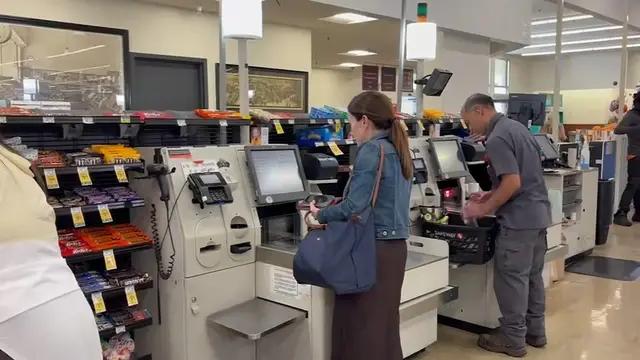
San Francisco is grappling with the rise of self-checkout stations in retail stores as the city weighs a proposal that would require one employee per three stations to ensure customer service, reduce theft, and preserve retail jobs. The measure, proposed by San Francisco Board of Supervisors President Rafael Mandelman, aims to address concerns over declining retail employment and the potential for overworked employees managing multiple self-checkout transactions.
The proliferation of self-checkout kiosks in grocery stores and pharmacies across San Francisco isn't a sudden phenomenon. It's been a gradual shift driven by a combination of factors: pressure on retailers to cut costs, evolving customer expectations for speed and convenience, and the promise of increased efficiency through automation. However, this shift hasn't been without its consequences, particularly for retail workers and the city’s overall economic landscape.
San Francisco, with its high cost of living and competitive labor market, has felt these impacts acutely. While self-checkout offers perceived benefits to store owners, the reality on the ground has often been a reduction in human interaction, increased pressure on remaining employees, and a rise in incidents of theft. The city's unique blend of economic challenges and social concerns makes addressing these issues particularly important.
The proposal, spearheaded by San Francisco Board of Supervisors President Rafael Mandelman, isn't about banning self-checkout altogether. It's a targeted regulation designed to mitigate the negative consequences associated with their increased use. The core element is the requirement of one employee for every three self-checkout stations. This isn’t just about providing assistance; it’s about ensuring adequate supervision, resolving technical issues promptly, and deterring theft. The proposal also includes a limit of 15 items per self-checkout transaction, further aiming to manage the workload and enhance customer flow.
The situation at a particular Safeway store in San Francisco serves as a stark illustration of the problem. With over ten self-checkout stations operating with only a single attendant, the workload is undeniably immense. That single employee is responsible for everything from assisting customers struggling with the technology to voiding transactions and, crucially, monitoring for potential theft. The incident involving a customer confrontation and the need for security intervention underscores the potential for escalating situations when staff is stretched thin. This isn't an isolated case; it reflects a broader trend in San Francisco's retail sector.
The San Francisco proposal is rooted in a larger national trend of declining retail employment. According to a report from the U.S. Bureau of Labor Statistics, the number of retail cashiers has fallen since 2019, and projections indicate a further 6% decline nationwide over the next decade—a loss of approximately 200,000 jobs. While automation and self-checkout are undoubtedly contributing factors, it's important to acknowledge the broader economic forces at play. The Bureau of Labor Statistics data highlights the need for proactive measures to protect retail jobs and mitigate the impact of technological advancements.
The decline in cashiers isn't just a statistic; it represents real people losing their livelihoods. These are often entry-level jobs that provide valuable experience and opportunities for advancement, particularly for young people and those with limited education. The San Francisco proposal aims to stem the tide of job losses, albeit in a limited capacity.
San Francisco isn't the only city grappling with the implications of self-checkout. Efforts to regulate these systems have been debated at both the state and local levels. Several proposals in Sacramento failed to gain traction, leaving local governments to take the lead in addressing the issue. This reflects a broader frustration with the state’s inability to enact comprehensive regulations, forcing cities to find their own solutions. San Jose is currently considering a similar measure, while four California cities have already adopted self-checkout rules. The experiences of these other cities will undoubtedly inform San Francisco’s approach and potential outcomes.
The experience of Long Beach, California, serves as a cautionary tale for San Francisco. In 2025, Long Beach implemented an ordinance similar to the proposed San Francisco regulation. However, the city’s ordinance led to unexpected consequences: ten stores removed self-checkout stations, citing concerns about how the law was being interpreted and enforced. This highlights the potential for unintended consequences and the importance of careful consideration when implementing regulations that impact business operations. The Long Beach experience underscores the need for clear, concise language in any ordinance and a robust enforcement mechanism.
The United Food and Commercial Workers (UFCW) Local 5 has been a vocal advocate for the San Francisco proposal. James Araby, a representative of the union, emphasizes the importance of ensuring that customers have a positive experience while also protecting retail jobs. Araby’s assertion that stores should be able to afford to hire one additional employee is a direct challenge to business groups who argue that the proposal would be financially burdensome. The union's involvement underscores the broader labor movement's concern over the impact of automation on workers' rights and job security.
The California Grocers Association, representing the interests of grocery retailers, has voiced strong opposition to the proposal. Nate Rose, a spokesperson for the association, argues that the regulation would increase operating costs for stores that already operate on narrow margins. He warns that these costs would likely be passed on to consumers in the form of higher prices or, as seen in Long Beach, lead to the elimination of self-checkout stations. This raises a fundamental question: how do we balance the need to protect workers and ensure customer service with the desire to keep grocery prices affordable?
Public opinion on the proposal is divided, reflecting the complex and multifaceted nature of the issue. Some residents, like Tony Ramos, believe that the city has more pressing priorities and that intervening in business operations is unwarranted. Others, like Elyze Stewart, support the idea if it helps reduce theft and create jobs. This divergence of opinion highlights the challenge of finding a solution that satisfies all stakeholders.
Beyond the staffing requirements, Mandelman's proposal also includes a limit of 15 items or fewer per self-checkout transaction. This is intended to further manage the workload and ensure that customers don't overwhelm the system. Enforcement of the regulations would be the responsibility of the Office of Labor Standards Enforcement and the San Francisco City Attorney's Office, potentially leading to fines or other penalties for non-compliance.
Mandelman emphasizes that the impacts of retail theft extend beyond the retailers themselves, affecting the entire community and surrounding businesses. The presence of more employees is seen as a deterrent to theft and a means of creating a safer shopping environment for everyone. This broader perspective recognizes that retail crime isn't just a business problem; it's a community safety issue.
The San Francisco Chamber of Commerce has questioned the necessity of the proposal, arguing that theft at self-checkout stations has been declining. They also point out that store employees are often prohibited from directly confronting suspected shoplifters, rendering the proposed regulations less effective. David Harrison, Director of Public Policy for the SF Chamber of Commerce, highlights the role of security cameras and troubleshooting assistance provided by employees, suggesting that the current system is adequate.
Some retailers have already implemented additional anti-theft measures to address concerns about self-checkout theft. At one San Francisco grocery store, customers are required to scan a barcode from their receipt to open electronic exit gates, while security personnel conduct occasional receipt checks before shoppers leave the store. These measures demonstrate the industry's ongoing efforts to combat theft, although their effectiveness remains to be seen.
The San Francisco Board of Supervisors will now consider the proposal, and public hearings are expected to be held to gather further input from stakeholders. The outcome remains uncertain, but the debate highlights the growing tension between the desire for efficiency and the need to protect workers and communities. Regardless of the final decision, the issue of self-checkout regulations is likely to remain a topic of discussion in San Francisco and other cities across California.
Looking ahead, the city faces a complex challenge in balancing the needs of businesses, workers, and consumers. The debate over self-checkout regulations is likely to continue, shaping the future of retail in San Francisco and potentially influencing policy decisions elsewhere.
Hillsborough, California
Business
Saturday, November 14, 2026
7 min
By Marcus Chen

By Marcus Chen

By Katherine Langford

By Marcus Chen